REKA Otomatik Yapı Teknolojileri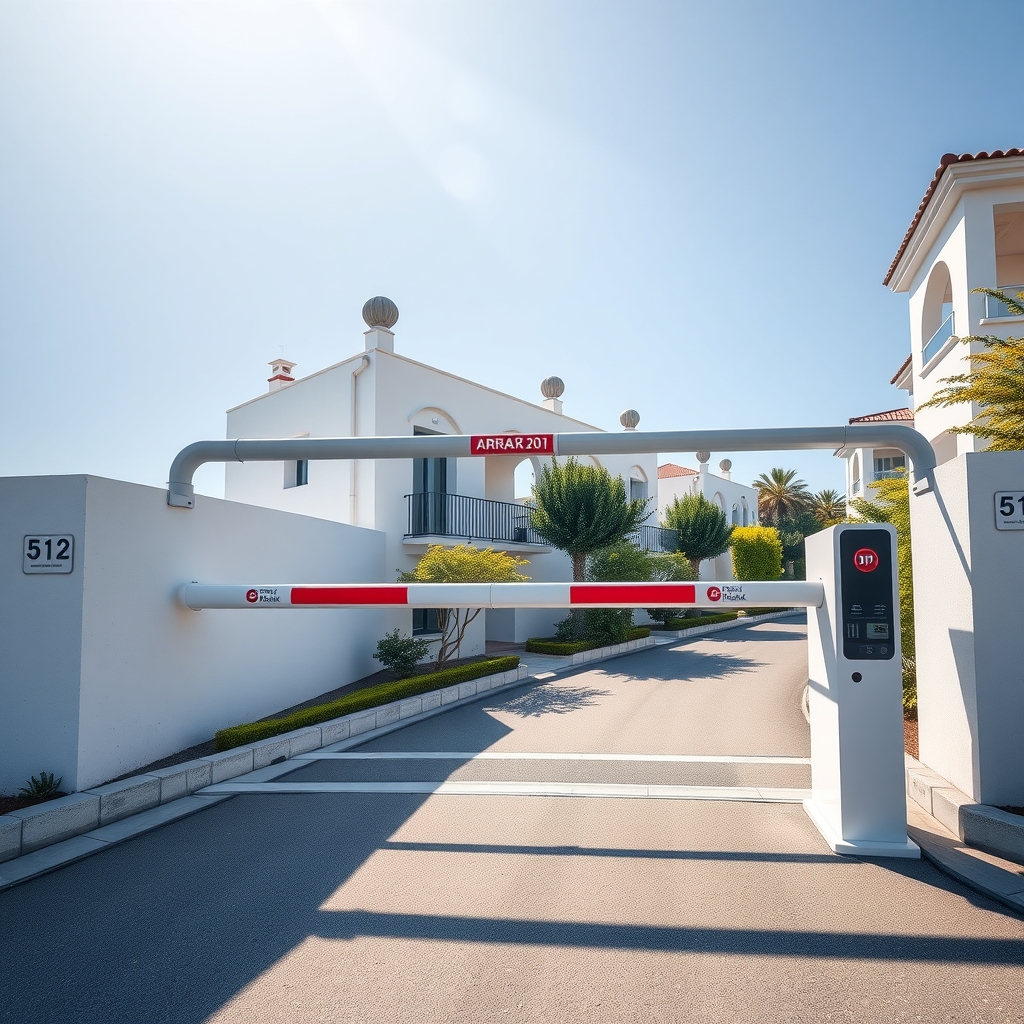
For a site manager, business owner or car park operator looking for a barrier system in Famagusta (Gazimağusa), the right decision is about more than choosing a barrier arm. How traffic flows, who will pass through, how coastal air affects the equipment and what happens during Kıb-Tek power cuts all need to be considered from the start. This guide explains, in plain language, the questions to ask when evaluating barrier and license plate recognition solutions, how the survey works and which maintenance habits matter.
REKA Otomatik Yapı Teknolojileri operates under BROKTECH Investment Ltd., based in Nicosia (Lefkoşa), and handles installation, maintenance and 24/7 breakdown service for barrier, license plate recognition and access control systems across North Cyprus. With more than 20 years of experience, what we see is this: a well-planned entrance works trouble-free for years, while a hastily chosen system produces complaints in its first summer.
Why should a barrier system in Famagusta (Gazimağusa) be considered separately?
Famagusta (Gazimağusa) is a city with very varied vehicle movement: port traffic, the university area, tourism facilities and busy residential complexes. In the same city you can find a quiet complex entrance and a business centre car park that gets busy morning and evening. That is why a setting that works in another city should not simply be copied here.
Equipment along the coast faces three factors:
- Salty and humid air, which over time affects metal surfaces, connection points and electronic enclosures.
- Summer heat, which stresses parts such as the motor, control board and battery.
- Wind-borne dust and sand, which can affect sensor lenses, moving parts and remote receivers.
None of this means a barrier will fail quickly. But without the right housing, suitable protection and regular maintenance, it is not realistic to expect a coastal system to run as effortlessly as an inland one. You can also find our regional services on our Famagusta (Gazimağusa) automatic door page.
Questions to answer before choosing a barrier
If you ask yourself the questions below before the survey, you save time for both us and yourself.
Who will pass through?
Only residents, or also visitors, couriers and service vehicles? As the number of passages grows, methods such as cards, tags or license plate recognition make more sense than a simple remote-controlled setup.
How do vehicles approach?
Is there enough room in front of the entrance for vehicles to wait? An entrance that blocks the road creates a bigger problem than the barrier itself. Whether entry and exit will share one lane or use separate lanes is also settled during the survey.
How will control be handled?
Will there be a security guard, or will the system run on its own? With a guard, a booth and manual override are planned; without one, remote management and record keeping come to the fore.
What happens during a power cut?
In North Cyprus, Kıb-Tek power cuts are part of daily life. Will the barrier stay closed or open during an outage, and can it be lifted by hand? If this is not decided at the start, a queue of vehicles forms at the gate during the first outage. See our power cut planning section for details.
Comparing system types
The table below summarises common entrance solutions by purpose of use.
| Solution | Suitable for | Point to watch |
|---|---|---|
| Remote-controlled barrier | Small complexes, private car parks | Remote management and lost remotes |
| Card or tag access | Mid-sized complexes, business centres | Card enrolment and permission management |
| License plate recognition | Busy car parks, controlled entry | Camera position and lens cleaning |
| Battery-backed barrier | Entrances sensitive to outages | Battery care and timely replacement |
| Combined with turnstile | Areas where pedestrian and vehicle entry meet | Separating pedestrian and vehicle paths |
To decide which solution suits you, we also recommend looking at access control and turnstile options; in many projects a barrier and a turnstile are planned together.
Tip: Camera lenses for plate recognition can become cloudy over time because of dust and salt. Wiping the lens with a soft, dry cloth is a safe check. For anything beyond that, notify the authorised service.
When does plate recognition make sense with a barrier?
License plate recognition is not necessary for every entrance. It adds value in these situations:
- When the number of vehicles is high and managing remotes becomes difficult.
- When visitor and guest vehicles need to be recorded.
- When the workload of the security guard needs to be reduced.
- When you want to be rid of lost or copied remotes.
For plate recognition systems, the installation location is decisive. If the camera angle, lighting and the vehicle stopping point are not set up properly, the system will not deliver the expected performance. That is why installation always starts with an on-site survey; we do not offer guesswork-based package solutions.
How does the process work from survey to handover?
For those curious about how we work, here is a short summary. You can also see the how it works page for details.
- The request is received by phone, WhatsApp or e-mail.
- A free on-site survey is carried out; the access road, ground, electrical infrastructure and usage habits are assessed.
- System types and brand options are presented according to your needs. We work with all brands; for the brand the customer wants, we contact the manufacturer immediately.
- After approval, installation is scheduled and carried out.
- At handover, usage is explained and remote or enrolment tasks are completed.
- Afterwards, periodic maintenance and 24/7 breakdown service come into play.
We give no figures on price in this article, because every entrance is different. Cost becomes clear after the survey, specific to your project.
Maintenance: the habit that determines a barrier's lifespan
After installation, maintenance is the most neglected topic. Yet for a barrier operating in a coastal area, regular checks are the most important condition for a long life. Periodic maintenance generally covers the following:
- Checking moving parts and connection points
- Cleaning sensor and photocell lenses
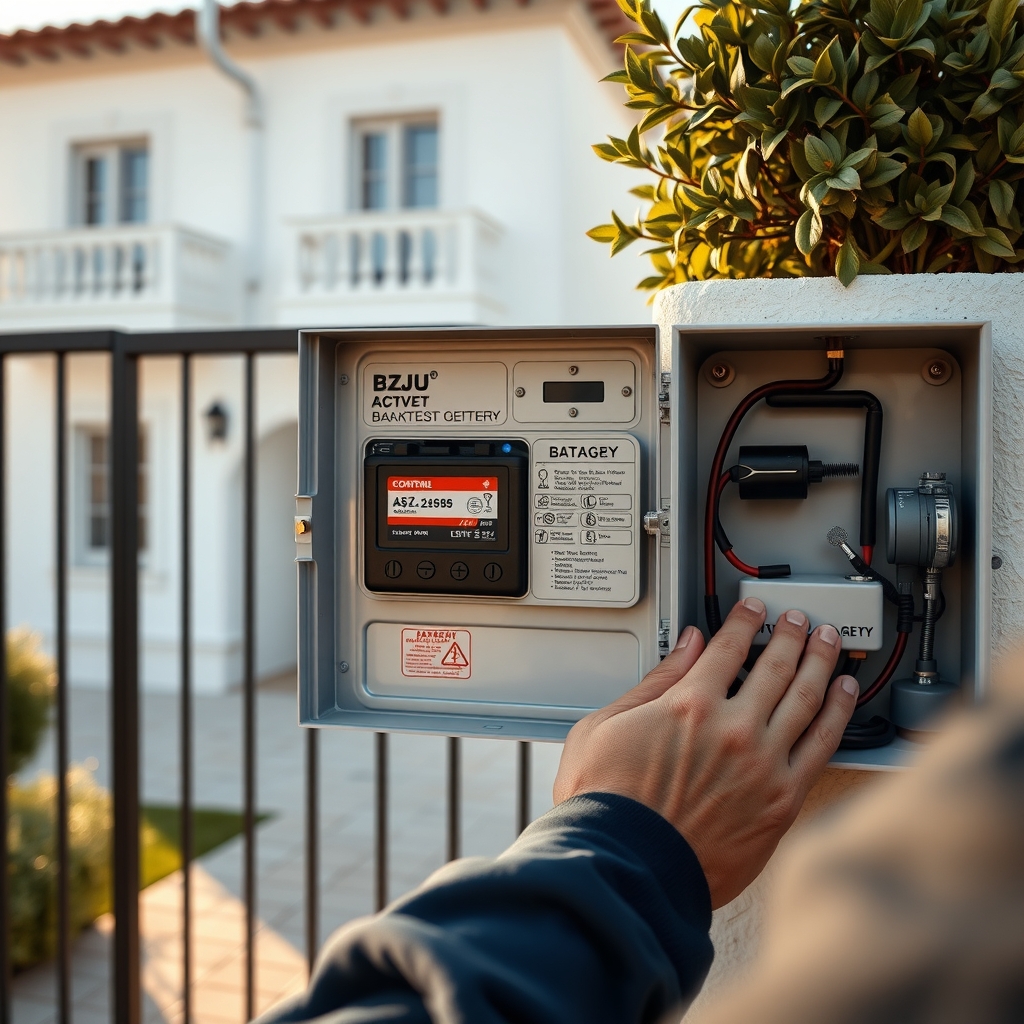
- Monitoring battery condition in battery-backed systems
- Inspecting the remote receiver and control board
- Reviewing the barrier arm and safety equipment
We want to be clear about the warranty: 3-year warranty; if periodic maintenance is carried out without interruption, the warranty can be extended to up to 5 years. Maintenance is not free of charge, and the warranty does not cover maintenance costs. In other words, maintenance should be planned as a way to preserve the warranty. For all our maintenance and breakdown services, see the maintenance and breakdown service page.
Warning: Opening the barrier's motor housing, handling cables or interfering with spring and battery connections is dangerous. Do not try these jobs yourself; only carry out simple checks such as replacing the remote battery and wiping the photocell lens.
If the barrier is not working, what should you check first?
The safe checks you can make before calling for service are limited, but they can help:
- Replace the remote's battery and try again.
- Look for dust or dirt on the photocell or camera lens and wipe it with a soft cloth.
- Check whether there is a Kıb-Tek power cut in the area.
- Make sure there is no obstacle in front of the barrier arm.
If the problem continues after these, contact us. Noting which symptom started and when speeds up the service team's work. We offer 24/7 breakdown service across all regions of North Cyprus.
Coast versus inland: comparison with Nicosia (Lefkoşa)
Nicosia (Lefkoşa) is inland and is not affected by the salty coastal air; there, heat and dust stand out. In coastal areas such as Famagusta (Gazimağusa), salt and humidity also come into play. This difference affects many decisions, from material selection to maintenance frequency. If the same management runs projects in two cities, the two entrances should not be viewed in the same way.
The seaside parts of Iskele, Kyrenia (Girne), Lefke and Güzelyurt have conditions similar to Famagusta (Gazimağusa). Entrances in these areas are also planned to suit coastal air.
Practical suggestions for complex managements
The barrier decision is often made by a management board, and everyone's expectations differ. A few habits help make the process easier. First, put the entry rules in writing: how will visitors be registered, how will couriers and service vehicles pass, what will be done if a remote or card is lost? Then appoint one person responsible for the system, so it is clear who to notify when there is a fault or a change in permissions. Finally, include the maintenance calendar in the annual budget; that way maintenance is not postponed and the system keeps working with the same reliability over the years.
A short briefing for residents is also useful. Reminding them that waiting in front of the barrier, pushing the arm by hand or always using the remote from the same spot can strain the system helps prevent small faults.
Checklist before deciding
Before going into the decision meeting for a barrier system, we suggest going over this list:
- Do entry and exit flow smoothly?
- Has the power cut scenario been decided?
- Are the number of users and the visitor arrangement clear?
- Has protection suited to coastal air been considered?
- Are the maintenance plan and the person responsible clear?
- Can plate recognition or a turnstile be added later if needed?
Answers to most of these questions are found at the on-site survey. You can also send your needs in a short message; just write to the quote form.
Free survey for a barrier in Famagusta (Gazimağusa)
If you are considering a barrier and plate recognition system for your complex, car park or business entrance in Famagusta (Gazimağusa), REKA Otomatik Yapı Teknolojileri is with you for a free survey. We inspect your entrance on site and, taking local conditions such as power cuts and coastal air into account, explain the options that suit you. Our references include the Middle East Technical University Northern Cyprus Campus and the Turkish Cypriot Peace Forces (TSK). You can reach us on 0539 102 13 13 by phone or WhatsApp, or at info@broktechinvestment.com.