REKA Otomatik Yapı Teknolojileri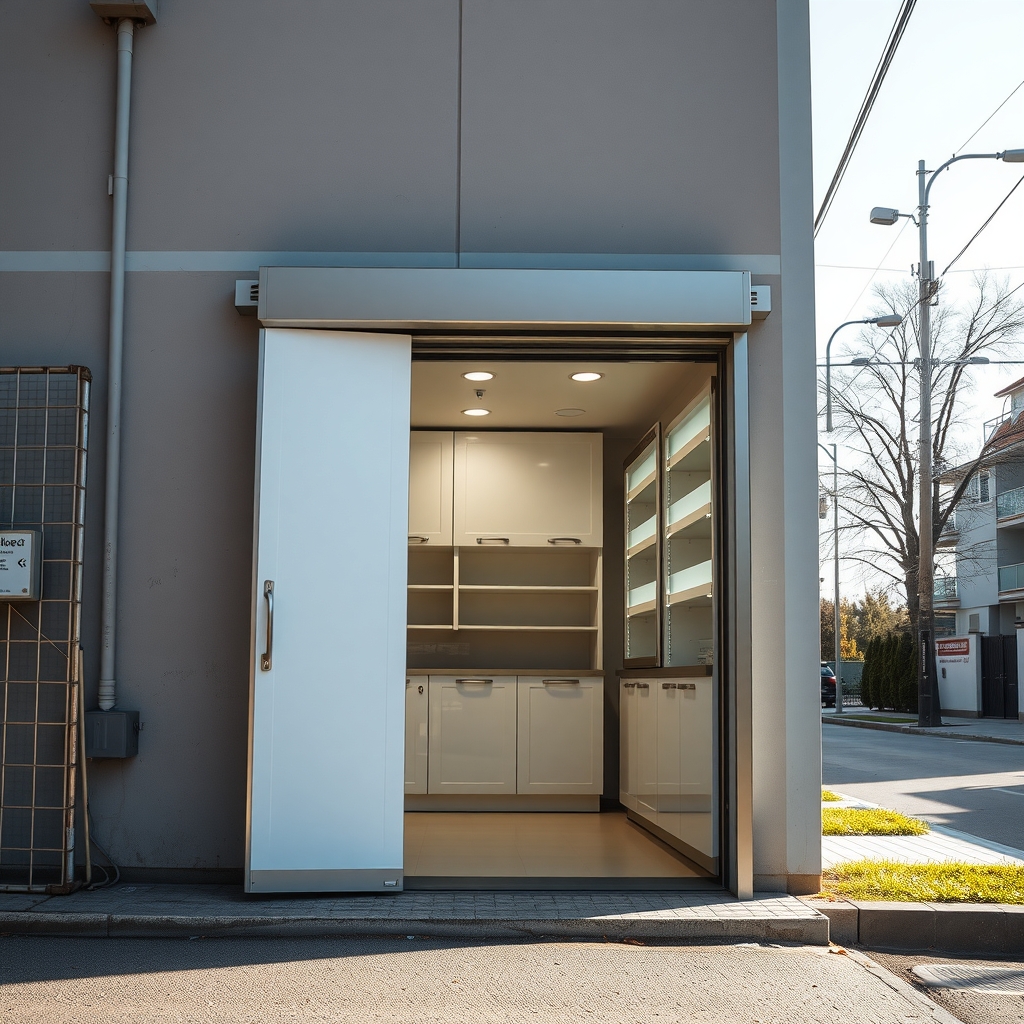
If you run a restaurant, market, hotel kitchen or warehouse and you are looking for a cold room door in Famagusta (Gazimağusa), one question comes up quickly: which door type suits my business, and what does it need to keep working without trouble for years? A cold room door keeps cold air inside, protects product quality and opens and closes many times a day. That is why choosing it only by appearance or initial cost can become expensive later. In this guide we explain, in plain language, what to look at when choosing a cold room door for businesses in Famagusta (Gazimağusa) and the surrounding area, what the coastal climate and Kıb-Tek power cuts change, and how the survey process works.
Why is a cold room door not an ordinary door?
An ordinary interior door simply separates two spaces. A cold room door separates two different temperature worlds: on one side, the cold environment where products must be preserved; on the other, a warm, humid and often busy kitchen, market aisle or loading area. If the door closes loosely, cold air escapes, the compressor works harder than it should, moisture builds up around the door, and over time the gasket and hinge area are damaged.
For this reason, three core functions should be considered together:
- Insulation and sealing: the door leaf and gasket must sit properly.
- Durability: the leaf, hinge and handle must stay sturdy under frequent use.
- Ease of use: the door must open easily with full hands or when passing with a tray or trolley.
In a coastal city like Famagusta (Gazimağusa), a fourth point is added: resistance to salty and humid air. We cover it separately below.
Which business should consider which type of cold room door?
Every business uses its cold room differently. In a restaurant, kitchen staff open the door constantly throughout the day. In a market, goods arrive at certain busy times. In a warehouse, trolley or forklift passage comes to the fore. The door should be chosen according to this pattern of use.
Hinged doors
This is the option most often considered for small and medium cold rooms. It is simple to use and opens and closes easily by hand. It is usually a sensible starting point for restaurants, cafés and small market cold rooms. However, there must be enough free space in front of the door for it to swing open.
Sliding doors
If there is no room in front of the door for a hinged leaf to open, or the corridor is narrow, a sliding door can make sense. For wide openings, a leaf that slides sideways may also be more practical. Rails and wheels on sliding systems need regular maintenance, because dust and dirt build up there quickly.
Automatic doors
In warehouses and loading areas with heavy traffic, a door that opens and closes automatically shortens the time cold air escapes and makes staff work easier. Automation also reduces the risk of the door being left open. In such a system, the sensor, motor and control arrangement must be planned around your business flow.
How does the climate in Famagusta (Gazimağusa) affect the door?
Famagusta (Gazimağusa) is a coastal city. Hot and humid summer air, wind-borne salt and dust show up on the outer surfaces and metal parts of cold room doors. Metal parts such as hinges, handles, locks and frames can wear faster in salty air. Gaskets may harden or lose flexibility over time in heat and under frequent use.
The practical conclusion is this: when choosing a door, discuss not only today's need but also the environment where the door will stand. A business close to the sea and a warehouse in an inland part of the city may not need the same door material or the same maintenance routine. This difference should be put on the table during the survey.
Tip: If you notice signs such as moisture around the door, a door that has to be forced shut, or a squashed gasket, do not dismiss them as minor details. These signs usually point to cold loss and a bigger fault later on.
How do Kıb-Tek power cuts concern the cold room door?
In cold rooms, the main worry is usually the compressor and the cooling system. But if the door is automatic, how it behaves during a power cut also matters. Making sure the door can be opened during a Kıb-Tek cut so that nobody is trapped inside is something every business should discuss in advance. Manual opening, emergency solutions and, where needed, battery-backed system options should be covered at the survey stage. For general information, see our power cut preparation section.
Warning: A person left inside a cold room must be able to open the door from the inside under all conditions. This is a safety requirement. Whether the door is manual or automatic, make sure this feature works. Do not intervene in the emergency release yourself; leave this work to the authorized team.
Comparison table for choosing a cold room door
The table below is prepared to compare different door types in terms of general use. It is only a guide; a final decision requires an on-site inspection of your business.
| Door type | Suitable for | Point to watch |
|---|---|---|
| Hinged door | Restaurant, café, small market cold room | Keeping the swing area clear |
| Sliding door | Warehouses with narrow corridors or wide openings | Cleaning rails and wheels |
| Automatic door | Warehouses and loading areas with heavy traffic | Sensor, motor and power cut plan |
| Near-coast installations | Businesses along the Famagusta (Gazimağusa) coast | Parts resistant to salt and humidity |
Step-by-step roadmap for choosing a cold room door
To keep the decision simple, you can follow this order:
- Note what the cold room is used for and how often it is opened each day.
- Review the space in front of the door, the passage route and any trolley or forklift use.
- Determine whether the room is close to the coast, receives direct sun and what its humidity is like.
- Decide whether the door will be manual or automatic; if automatic, discuss the power cut plan.
- Clarify whether you want to replace the existing door or continue with maintenance and repair.
- Contact REKA for a free survey and have an on-site assessment made.
To see the process in more detail, take a look at our how it works page.
Why is maintenance so important?
Cold room doors are used many times a day, so wear is unavoidable. On a door whose maintenance is neglected, the gasket can harden, the hinge can loosen, the lock can become hard to close, and automatic systems can develop sensor or remote control problems. All of these lead to cold loss and disrupt daily work.
The benefit of regular maintenance is not only keeping the door running. Making a small adjustment on time can help you postpone a major part replacement. At REKA we offer maintenance and fault services under a separate heading; for details, see our automatic door maintenance and fault service page.
On warranty, let us be clear: 3-year warranty; if periodic maintenance is carried out without interruption, the warranty can be extended to up to 5 years. Maintenance is not free of charge, and the warranty does not cover maintenance costs. In other words, maintenance is a process that a business needs to plan regularly.
Tip: Placing the maintenance schedule in a quiet period for the business makes it easier to carry out the work without disrupting cold room use or the team's working routine.
What can you do yourself, and what should you avoid?
The safe checks you can make as an owner or employee are limited and deliberately kept simple:
- Wipe the area around the door and the visible part of the gasket with a soft cloth.
- Observe whether there is any unusual noise, friction or strain when opening and closing the door.
- On an automatic door, gently wipe visible surfaces such as the sensor lens.
- Replace the battery of the remote control, if there is one.
Beyond these, do not touch parts such as the motor, cables, electrical panel, lock mechanism and emergency release. Because a cold room door concerns both food safety and the safety of staff, installation and electrical work should be left to a specialist team.
How does the service work in Famagusta (Gazimağusa)?
REKA Otomatik Yapı Teknolojileri, part of BROKTECH Investment Ltd., is based in Nicosia (Lefkoşa) and serves all regions of North Cyprus. We provide installation, maintenance and 24/7 fault service in regions including Famagusta (Gazimağusa), Iskele, Kyrenia (Girne), Nicosia (Lefkoşa), Güzelyurt and Lefke. With more than 20 years of experience, we assess the door needs of businesses in different sectors on site. For more information about our services in Famagusta (Gazimağusa), see our Famagusta (Gazimağusa) automatic door page.
We work with all brands. For the brand a customer wants, we contact the manufacturer right away. This way your business can evaluate the solution that suits its needs without being tied to one brand.
To see the scope of the cold room door service, you can review our cold room door service page. Our references include the Middle East Technical University Northern Cyprus Campus (METU NCC) and the Turkish Cypriot Peace Forces (TSK).
What should you tell us during the survey?
To help us understand your business need faster during the free survey, it is enough to prepare the following:
- The type of your business and what the cold room is used for.
- If there is an existing door, its problems or your reason for renewing it.
- How heavily the door is used each day and how people or goods pass through.
- Environmental conditions such as closeness to the coast, sun and humidity.
- What kind of solution you expect during a power cut.
- The name of a preferred brand, if you have one.
This information helps us ask the right questions during the survey and explain options suited to your business. Pricing depends on the survey; we do not give figures in this article because every door's conditions are different. To send your request, you can reach the quote form.
Conclusion
Choosing a cold room door in Famagusta (Gazimağusa) should be done by considering usage intensity, door type, coastal climate, maintenance plan and the power cut scenario together. A well-planned door protects the cold chain, makes staff work easier and reduces the risk of unexpected faults in the long run.
If you want a free survey for a cold room door in Famagusta (Gazimağusa) or anywhere in North Cyprus, contact REKA: Phone/WhatsApp 0539 102 13 13, e-mail info@broktechinvestment.com. Let us listen to your needs and assess them on site.