REKA Otomatik Yapı Teknolojileri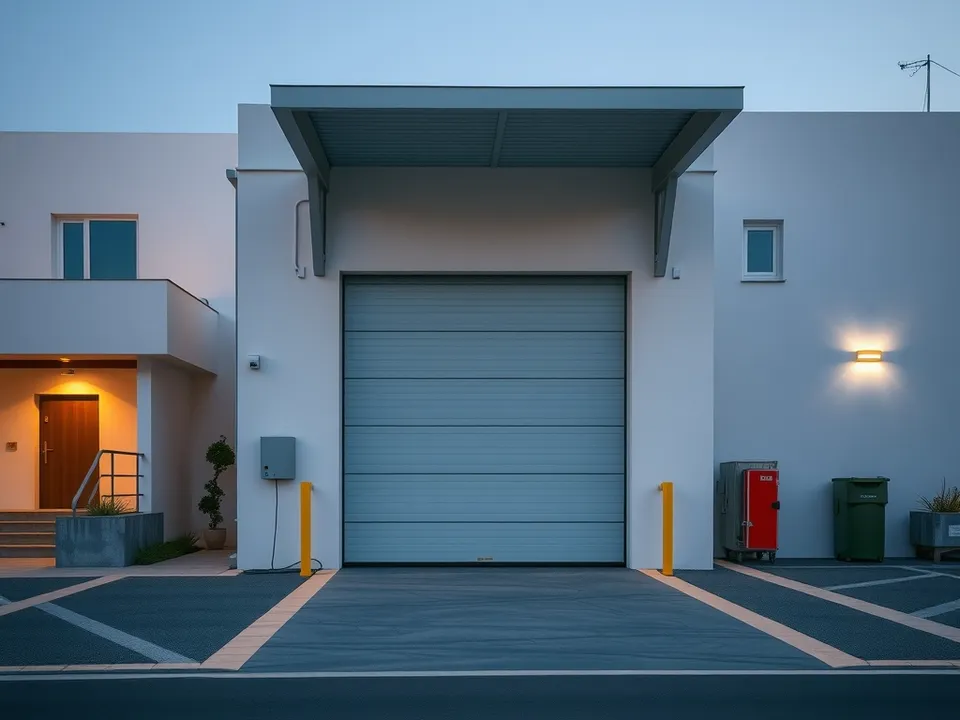
What is a dock shelter, and why is it so often chosen for warehouses and logistics areas? If you run a warehouse, a supermarket chain, a cold store or a production facility in North Cyprus, the gap between the truck and the building at the loading dock is one of the least noticed yet most costly points in daily operations. In this guide, we explain step by step what a dock shelter does, which types are available, how it adapts to the hot and dusty climate of Cyprus, how to make the right choice and what to look out for in maintenance.
What is a dock shelter and what does it do?
A dock shelter is a flexible sealing system that closes the gap between the loading door and the vehicle body. When a truck or lorry backs up to the dock, the shelter makes contact with the rear of the vehicle and forms an enclosed passage around the door. This separates the outdoor environment from the inside of the warehouse during loading and unloading.
This seemingly simple structure delivers several concrete benefits to a business:
- It reduces dust, rainwater, insects and birds getting into the warehouse.
- In air-conditioned or refrigerated areas, it limits the escape of cold air, which has a positive effect on energy costs.
- It helps protect sensitive products such as food, pharmaceuticals, cosmetics and electronics from external factors.
- It improves working comfort for loading staff and eases the burden at the dock on hot, sunny days.
- It acts as a buffer against minor damage that can occur between the vehicle and the door.
Considering that summers in Cyprus are long and hot, every moment the door stays open means energy loss, especially in refrigerated warehouses. That is why a dock shelter is not a luxury for most businesses but part of how the operation runs.
Types of dock shelters
There are shelters of different designs on the market. Choosing the right type depends on how your dock is used and the types of vehicles arriving.
Soft shelter (fabric shelter)
Made from a durable, flexible fabric, it folds and takes shape when the vehicle backs up against it. Its biggest advantage is that it adapts to vehicles of different sizes. It is generally preferred in warehouses where the types of arriving vehicles change frequently.
Cushion dock seal (compression seal)
Cushion-like sections around the door compress when the vehicle reverses in, providing a seal. It is common in facilities where the same type of vehicle docks regularly and sealing is a priority.
Inflatable dock shelter
Once the vehicle is in position, it inflates with the help of a fan and fits tightly against the vehicle body. It is considered for areas that require adaptation to different trailer sizes and a high level of sealing. Because it contains an electrical component, its maintenance must be carried out by an expert team.
Retractable (framed) dock shelter
It folds on a rigid frame. When not in use, it stays neatly around the door, and opens to make contact when a vehicle docks. It is a suitable option for intensive use in the short and medium term.
Which type suits which business?
The table below offers general guidance for different needs. The final decision is made during the site survey once the dock structure has been seen.
| Application | Key requirement | General guidance |
|---|---|---|
| Cold store | Limiting cold loss | Cushion or inflatable shelter, a solution compatible with the cold room door |
| Market and chain store warehouse | Frequent vehicle traffic, varying vehicle types | Soft or retractable shelter |
| Production and factory dock | Protection from dust and external factors | Cushion dock seal |
| Logistics and distribution centre | Adaptation to different vehicle sizes | Soft or inflatable shelter |
| Warehouses near ports | Resistance to salty air | Corrosion-resistant frame and fabric |
What to consider when choosing a dock shelter in North Cyprus
The climate and geography of North Cyprus directly affect the choice of shelter. These points often come up in the field:
Heat and sun: On docks exposed to direct sunlight throughout the summer, the fabric and frame material can fatigue over time. Materials with high sun resistance and the orientation of the dock are important in the selection.
Dust: Especially in areas with a lot of construction activity and during dry seasons, dust builds up on the shelter surface and door tracks. The need for regular cleaning should be planned accordingly.
Salty air: Warehouses close to the sea along the Kyrenia (Girne), Famagusta (Gazimağusa) and Iskele coastline face a risk of rust on metal parts. Coated and corrosion-resistant parts last longer in these areas.
Wind and rain: On rainy winter days, preventing water from pooling around the dock is important to protect the lower section of the shelter. Although snow and frost are rare in Cyprus, heavy downpours can cause flooding in the loading area.
Kıb-Tek power cuts: For systems with electrical components, such as inflatable shelters, what happens during a power cut should be planned in advance. It is useful to prepare a power cut plan for solutions that withstand outages and designs that allow manual operation. For details, see our power cut solutions.
Tip: Efficiency increases when the dock shelter, loading door and cold room door are planned not separately but as a complementary whole. If you have a refrigerated area, consider it together with our cold room door solutions.
Steps to choosing the right dock shelter
Following the steps below will help you avoid both unnecessary costs and choosing the wrong product.
- Define the usage. Note how many vehicles arrive per day, what types of vehicles dock and how loading is distributed throughout the day.
- Inspect the current condition of the dock. The door structure, dock height, surrounding ground and shade conditions determine the choice of shelter.
- Consider the type of goods. Sealing is more critical for food, pharmaceuticals or sensitive products; for general storage, flexibility may take priority.
- Factor in regional conditions. Near the coast, corrosion takes priority; inland, dust and heat do.
- Clarify electrical requirements. If you opt for an electrical system, discuss in advance how it will operate during a power cut.
- Request a free site survey. An on-site inspection ensures the most accurate sizing and type selection.
- Installation and commissioning. Installation should be carried out by an expert team and verified with a vehicle docking test.
Remember that a dock shelter does not work on its own but together with the loading door and surrounding systems. If you are thinking about renewing your warehouse doors, you can also look at our services and roller shutter solutions.
Dock shelter maintenance and common problems
Because shelters are constantly exposed to vehicle contact and external factors, they wear over time. When maintenance is neglected, sealing decreases, energy loss increases and minor damage can grow.
Common problems
- Tears, wear or sun fading of the fabric
- Separation at edge joints
- Loosening of the frame or fixing parts
- Rust on metal parts in coastal areas
- Faults related to the fan or air system in inflatable systems
- Door sections that jam or do not open properly
Simple checks you can safely carry out
The checks that business staff can carry out are limited and are based solely on visual monitoring. Check the shelter surface for tears or sagging, keep the area around the dock clean and do not leave obstacles in the docking area for approaching vehicles.
Warning: Do not carry out any dismantling, installation or electrical work on the shelter, frame or electrical components yourself. Such work should be left to a qualified service team. Otherwise, both personal safety and system safety are put at risk.
A periodic maintenance plan ensures problems are noticed before they grow. Our company offers a 3-year warranty; if periodic maintenance is carried out without interruption, the warranty can be extended to up to 5 years. Maintenance is not free of charge and the warranty does not cover maintenance costs, so it is useful to plan the maintenance schedule from the start. For details, see our maintenance and service page.
Brand selection and compatibility
One of the most frequently asked questions when having a dock shelter installed is about brands. REKA Automatic Building Technologies works with all brands. If you have a preferred brand, we contact the manufacturer straight away for product and spare parts information. This creates a clear roadmap both for compatibility with your existing loading door and for future spare parts supply.
Dock shelters, safety and working practices
The loading dock is an area where workplace accidents occur relatively often. A shelter is not directly a piece of safety equipment; however, because it closes the gap between the vehicle and the building, it helps reduce the risk of falls, trips and slips caused by outdoor weather. Staff waiting in the appropriate zone while a vehicle docks, keeping the dock area tidy and maintaining a safe distance while the door is moving should become habits.
Putting working procedures in writing is also a good approach for automatic door and dock systems. Which vehicle docks at which door, how the shelter is checked during loading and whom to contact in case of a fault should be information everyone knows. In corporate facilities, such written procedures support both safety and continuity.
Our service and references across North Cyprus
REKA Automatic Building Technologies operates under BROKTECH Investment Ltd., based in Nicosia (Lefkoşa), and serves all regions of North Cyprus, including Nicosia, Kyrenia, Famagusta, Iskele, Güzelyurt and Lefke. Over more than twenty years of experience, we have carried out work for institutions such as the METU Northern Cyprus Campus and the Cyprus Turkish Peace Forces. In addition to dock shelter installation, we provide support for barriers, sensor doors, revolving doors, access control, roller blinds, guillotine glass and roller shutter systems; you can find these on our dock shelter service page and in our how we work section. For our other articles, visit our blog page.
We offer 24/7 service support in the event of a fault. You will notice from the first meeting how convenient it is for your business to work with a single point of contact for both the pre-installation survey and after-sales maintenance.
Conclusion
A dock shelter is a solution that limits energy loss in the loading area, protects products and staff, and supports the business against climatic conditions. With the right type, the right size and regular maintenance, it provides trouble-free service for many years. Given the heat, dust and salty coastal air of Cyprus, working with a team that knows local conditions makes a big difference.
If you would like to assess the condition of your warehouse or loading dock together, REKA Automatic Building Technologies is here for you with a free site survey. You can reach us by phone or WhatsApp on +90 539 102 13 13 or at info@broktechinvestment.com, or fill in the quote form.