REKA Otomatik Yapı Teknolojileri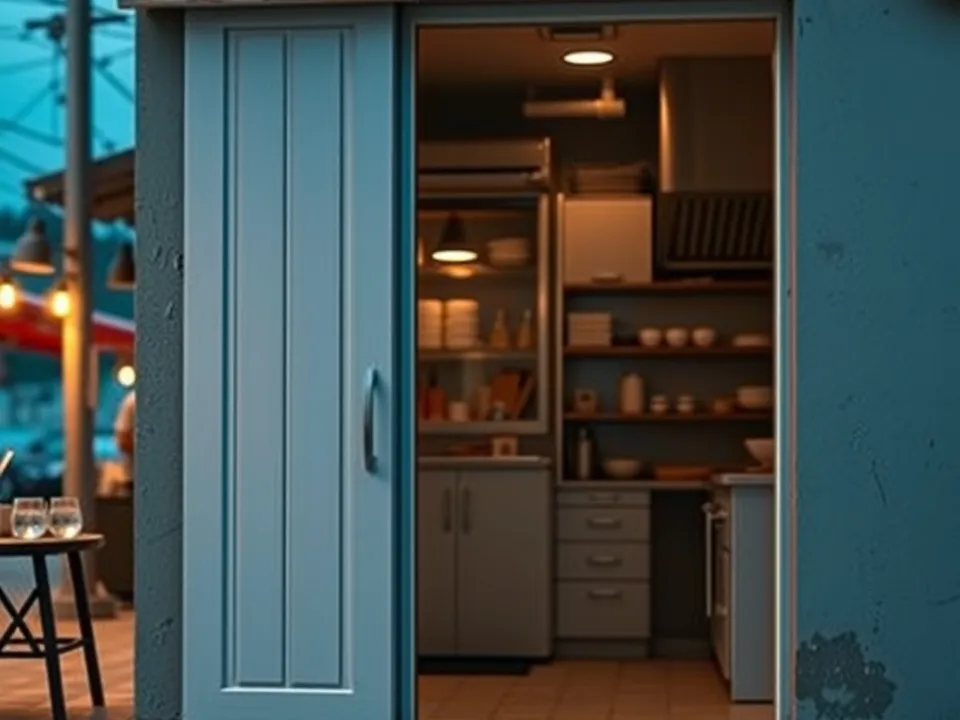
From restaurant kitchens to supermarket aisles, and from hotel storerooms to food production facilities, the cold room door is a critical component in every business that relies on the cold chain. A poorly chosen cold room door can lead to both energy loss and disruptions in daily operations. As REKA Automatic Building Technologies, we provide cold room door installation, maintenance and repair services across North Cyprus; in this article we cover the types of cold room doors, what to consider under North Cyprus conditions, and the installation process.
What Is a Cold Room Door and Why Does It Matter So Much?
A cold room door is a specialised, highly sealed door system that limits contact between the outside environment and storerooms, kitchens or production areas that must be kept at low temperatures. What sets it apart from a standard door is that it is manufactured with special seals and insulation materials to maintain the temperature difference.
In restaurant kitchens, market storerooms and food production facilities, the cold room door is a passage point that is opened and closed many times every hour of the day. This intensive use tests both the door's mechanical durability and its sealing performance over the long term. That is why, when choosing a cold room door, you should consider not only the initial cost but also its resistance to daily usage intensity.
These doors matter not only for energy efficiency but also for food safety. Frequent interruptions to the cold chain can affect both product quality and the operational reliability of the business. For this reason, a cold room door is not a secondary detail for many food businesses but a fundamental infrastructure investment.
Especially in storerooms where staff or forklifts enter and exit many times a day, some cold air escapes every time the door opens. A door that opens and closes quickly and seals properly prevents these losses from accumulating. Cold room door selection should therefore be evaluated not only by the initial installation cost but also by long-term operating efficiency.
Energy Efficiency and the Cold Room Door
There is a direct relationship between the seal of a cold room door and the energy consumption of the business. Wear that develops over time on the gasket or door surface can cause small air leaks that are invisible to the eye; this makes the refrigeration system run more often and for longer. Regular maintenance and timely gasket replacement are the most practical way to prevent such losses.
Reducing the time the door stays open is also important for energy efficiency. Systems with an automatic closing mechanism prevent the cold room from being left open unnecessarily, even when staff forget to close the door.
Types of Cold Room Doors
Different types of cold room doors can be chosen depending on how often the door is used and the layout of the space.
| Door Type | Suitable Application | Key Feature |
|---|---|---|
| Hinged cold room door | Small storeroom, back-of-store cold room | Simple design, suitable for low frequency of use |
| Sliding/high-speed door | Kitchen and storeroom entrances with heavy traffic | Opens and closes quickly, limiting temperature loss |
| Door supported by PVC strip curtain | Areas with constant forklift or staff traffic | Provides some insulation even while the door is open |
Tip: In cold rooms where staff go in and out frequently during the day, adding a PVC strip curtain next to the door can help reduce temperature loss while the door is open.
Which door type to choose depends not only on how often the door is used but also on the type of goods being moved. For example, a storeroom where palletised goods are moved by forklift needs a wide-opening sliding door, while a more compact hinged door may be sufficient for a cold room behind a small market.
Special Factors for Food Businesses in North Cyprus
The climate of North Cyprus highlights several points in the selection and use of cold room doors:
- High outdoor temperatures: In summer, the difference between the outside environment and the cold room increases, making it even more important that door seals are robust and airtight.
- Intensive use: During the tourist season, traffic in and out of restaurants and markets can increase, making the door's durability and fast operation even more critical.
- Kıb-Tek power cuts: During a power cut, having a manual opening option for motorised sliding doors is important so that access to the cold room is not completely cut off. You can check out our solutions for power cut scenarios.
- Humidity and salt in coastal areas: For businesses on the coast such as Kyrenia (Girne), Famagusta (Gazimağusa) and Iskele, choosing corrosion-resistant materials for metal parts extends the life of the door.
Since frost or extremely cold weather is rare in Cyprus, the main priority in choosing a cold room door should be resistance to outdoor heat and humidity.
During the tourist season, cold room use can increase noticeably in restaurants and hotels in areas such as Kyrenia and Famagusta. During these periods, smooth door operation has a direct impact on the kitchen's ability to provide uninterrupted service. Planning a maintenance check before the season can therefore reduce the risk of an unexpected breakdown during the busy period.
Installation Process: From Site Survey to Handover
At REKA, we carry out cold room door installation in the following steps:
- Free site survey: The cold room entrance dimensions, frequency of use and staff/forklift traffic are assessed on site.
- Door type recommendation: Based on the business's usage pattern, a hinged, sliding or PVC strip-supported solution is recommended.
- Brand and material selection: If you have a preferred brand, we contact the manufacturer; if not, we offer reliable options that suit your needs.
- Installation: The door body, sealing system and, where applicable, motor wiring are installed by our expert team.
- Testing and handover: The door's sealing and opening/closing performance are tested, and usage information is passed on to the business.
To see the general flow of the installation process, you can visit our how it works page.
Maintenance, Hygiene and Warranty
Because cold room doors are used in areas where hygienic conditions must be maintained for food safety, regular maintenance is especially important. For the systems REKA installs: 3-year warranty; if periodic maintenance is carried out without interruption, the warranty can be extended to up to 5 years. Maintenance service is not free of charge, and the warranty does not cover maintenance costs.
Warning: If you notice damage, loosening or loss of sealing on the gasket or door surface, do not try to repair it yourself; this can affect both food safety and energy efficiency. The right step is to contact our maintenance and repair service.
The safe checks you can do as a business owner are limited: checking whether the seals around the door show visible damage and keeping the area in front of the door clear can help you spot problems early.
Integrating the Cold Room Door with Other Systems
A cold room door is usually considered not on its own but as part of the business's overall entrance and logistics plan. For example, a system used together with a dock shelter at the rear entrance of a warehouse can help minimise contact with the outside environment during loading. At the shopfront, an integrated security plan can be created with a roller shutter system.
Such integrations benefit large restaurant chains, markets and food production facilities in particular, both in terms of energy efficiency and operational order. You can explore all our service options on our services page.
When both the cold room door and the roller shutter system on the building façade are installed and maintained by the same company, responsibility in the event of a fault is clear, and the maintenance schedule can be managed under a single plan. This is a practical convenience, especially for businesses with multiple locations.
Which Businesses Should Prioritise a Cold Room Door?
Investing in a cold room door has become an almost essential infrastructure element for certain types of business:
- Restaurant and hotel kitchens, due to intensive daily use
- Markets and supermarkets, for chilled aisles and storage areas
- Food production and packaging facilities, for processes that require a continuous cold chain
- Wholesale food warehouses, for businesses that need to store large volumes of products
In these businesses, the cold room door is not just an insulation element but a system that directly affects the reliability of daily operations.
If you are opening a new food business, planning your cold room door selection at an early stage of kitchen or storeroom design ensures a smoother installation in terms of both layout and electrical infrastructure. If you have an existing cold room and experience frequent breakdowns, it may be worth reassessing whether the current door suits your usage intensity.
Conclusion: Get Professional Support for the Right Cold Room Door
Choosing a cold room door depends on many factors, such as frequency of use, room size, staff traffic and budget. The wrong system can lead to both energy loss and unexpected breakdowns. As REKA Automatic Building Technologies, with over 20 years of experience, we install cold room door systems suitable for food businesses in every region of North Cyprus - Nicosia (Lefkoşa), Kyrenia, Famagusta, Iskele, Güzelyurt and Lefke - and provide regular maintenance and 24/7 repair support.
If you would like to assess together which cold room door system is best for your business, you can contact us for a free site survey or request a quote directly. You can find our articles on other automation topics on our blog page.
Whether you are setting up a new business or experiencing recurring problems with your existing cold room, regular maintenance planned alongside the right system protects both your products and your daily operations in the long run. We would be happy to assess your needs on site and recommend the most suitable solution.